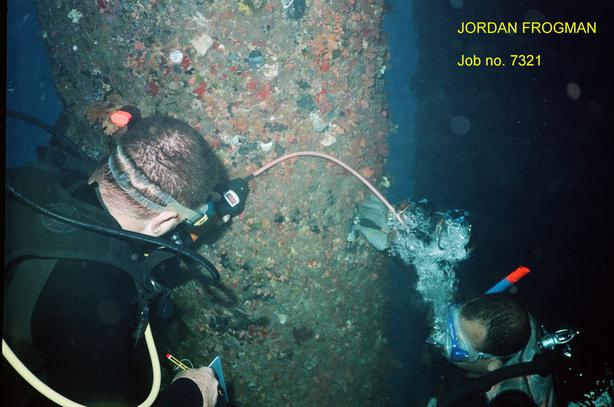
At Jordan Frogman, diving operations are grounded in the practical application of physics and engineering principles. The company operates within a technically driven environment where scientific concepts are consistently applied to ensure precision, safety, and operational efficiency.
Core Physics Applications
Daily operations involve key areas of applied physics, including:
Gas Laws & Pressure Systems (Boyle’s Law)
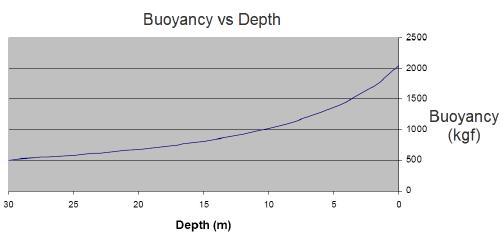
The relationship between gas pressure and volume is fundamental in diving operations. Boyle’s Law is applied to understand how compressed air behaves at different depths, supporting safe and efficient air management.
Hydrostatic Pressure
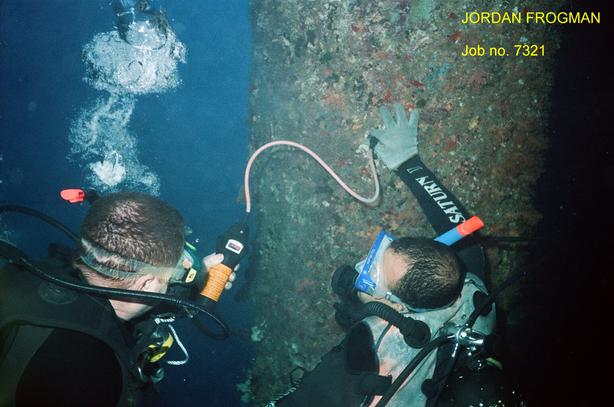
Underwater conditions involve increasing pressure with depth. These conditions provide direct application of hydrostatic pressure principles and their effects on equipment, structures, and materials.
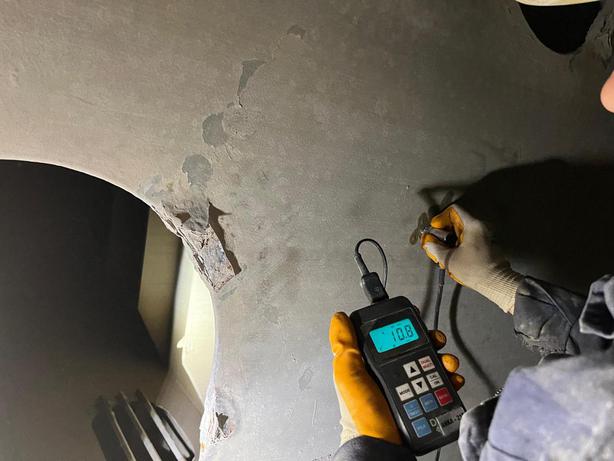
Ultrasonic Thickness Measurement (UTM)
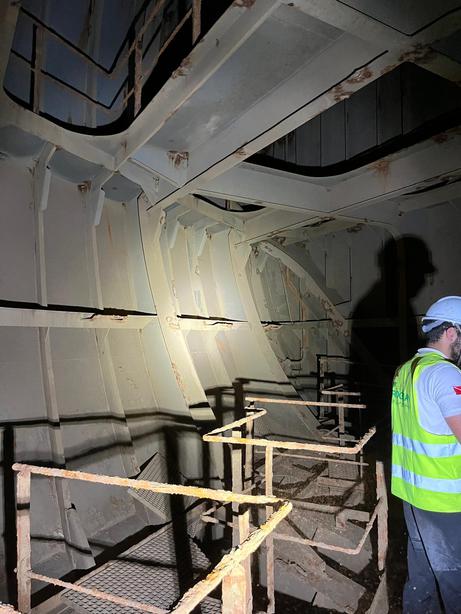
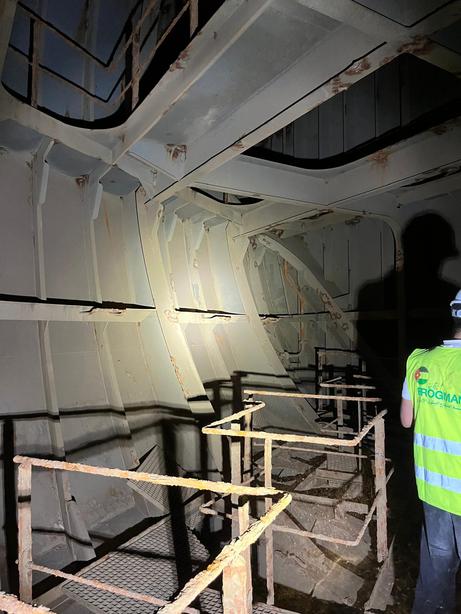
Advanced inspection techniques such as Ultrasonic Thickness Measurement (UTM) are utilized to assess material integrity. This process is based on wave propagation, reflection, and precise time-of-flight calculations, widely used in non-destructive testing (NDT).
Fluid Mechanics
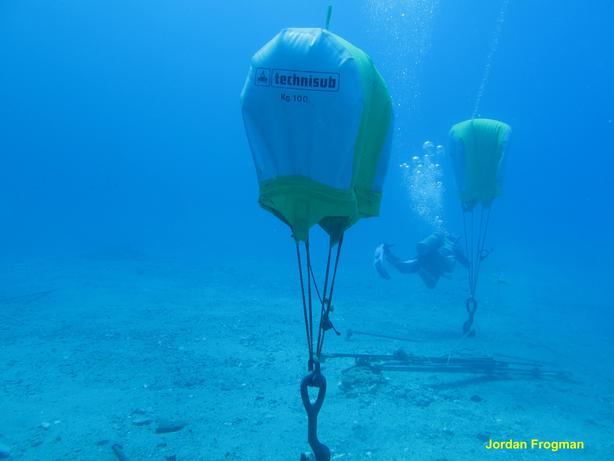
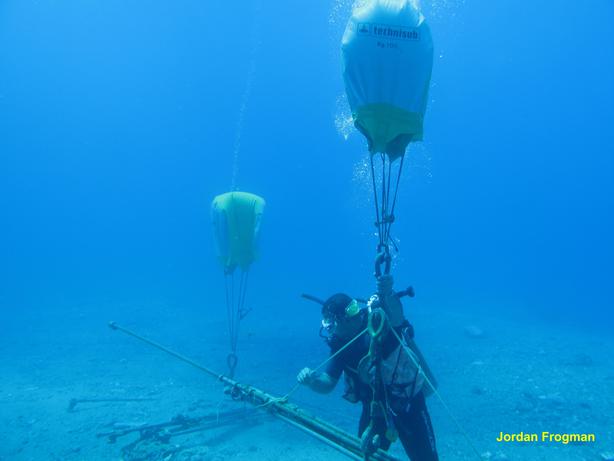
Principles such as buoyancy, drag, and fluid dynamics are integral to underwater movement, stability, and operational control.
Thermodynamics & Gas Compression
High-pressure compressors are used to fill diving tanks, involving thermodynamic processes including heat generation, pressure variation, and energy transfer within gas systems.
Technical Infrastructure
Jordan Frogman operates professional-grade air compression and diving support systems, including:
High-pressure diving tank filling systems
Industrial air compressors for scuba and commercial diving
Pressure monitoring and regulation systems
Safety-controlled environments for handling compressed gases
These systems reflect real-world engineering applications in high-pressure and underwater environments.
Professional & Technical Environment
Operations at Jordan Frogman are conducted within a structured and technically disciplined framework, emphasizing:
Precision in measurement and applied calculations
Safe handling of high-pressure and underwater systems
Integration of physics theory with field operations
Compliance with industry safety and engineering standards